中二病
Pentagon orders 30 universities to scrutinize ties with Chinese research partners, fueling new ‘Cold War’ in science_我的网站

A |
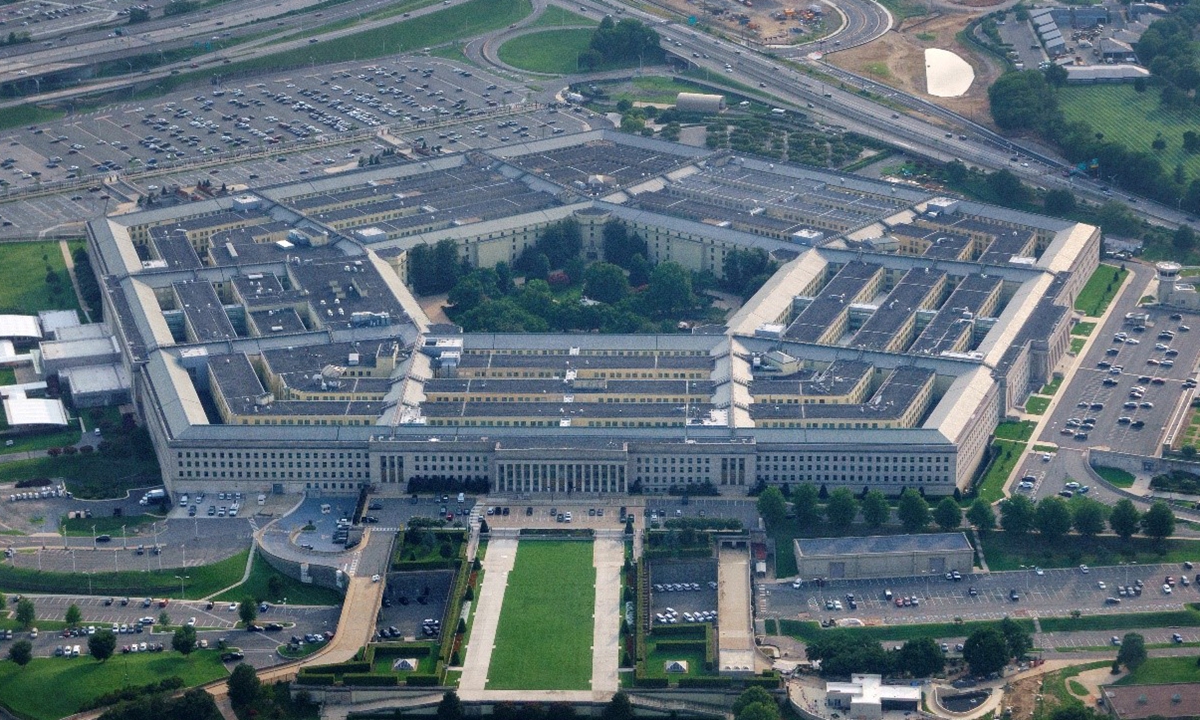
The Pentagon, headquarters for the United States Department of War, is seen on August 13, 2026 in Arlington, Virginia. Photo: VCG
The US Department of War has ordered 30 US universities to review their research, financial and academic ties with foreign entities of concern, including Chinese institutions and organizations linked to former Confucius Institutes, warning that failure to comply could jeopardize their eligibility for future federal research funding.
This move marks the latest step in US' efforts to tighten academic cooperation with China, extending Cold War-style thinking into scientific research. Curtailing academic exchanges would ultimately undermine US' own research and innovation capacity, creating a self-imposed bottleneck for technological development, said a Chinese expert.
In a statement on Monday, the department said that it had formally notified the universities to conduct "immediate and comprehensive" audits of their foreign collaborations as part of a broader effort to tighten research security and prevent what it described as "unauthorized technology transfers, intellectual property theft and adversarial exploitation."
The reviews will cover active ties with foreign institutions identified under Section 1286 of the FY2019 National Defense Authorization Act, as well as organizations associated with rebranded Confucius Institutes. The institutions must report their findings and any actions taken to the department by August 31.
This move marks another step in Washington's push to tighten its "research security" agenda and shield US academia from perceived "foreign influence," as the federal government increasingly intervenes in universities' research partnerships, Zhu Ying, a professor at the Baize Institute at the Southwest University of Political Science and Law, told the Global Times on Tuesday.
By stretching the concept of national security, constraining academic freedom and politicizing scientific cooperation, Washington is turning research ties into a tool of strategic competition with China, said Zhu.
On July 23, the Department of War released its FY2025 update to the Section 1286 list, identifying 130 academic and research institutions in China, Russia and Iran that it claimed engaged in "problematic activities" and pose risks to US-funded research. The department urged US researchers, universities and industry partners to exercise strict caution when collaborating with, sharing data with or providing funding to institutions on the list.
Of the academic and research institutions on the list, more than 80 are based in China.
Zhu noted that the list continues to expand, covering more institutions and academic fields. The policies are putting growing pressure on US universities, threatening some joint projects and constraining decisions on research teams, funding and international exchanges. Moreover, these measures reflect a clear anti-China bias and risks creating discriminatory barriers.
The Pentagon's statement on Monday claimed that to maintain eligibility for future federal research funding, the notified universities must complete a comprehensive audit of all identified foreign collaborations, assess the exposure of sensitive or export-controlled research, and implement strict mitigation plans, including the termination of problematic partnerships.
The Pentagon did not release the names of the 30 universities. However, a Fox News report on Monday cited a US official as identifying the schools subject to the audit, including Georgetown University, the Massachusetts Institute of Technology, the University of California, Berkeley, the University of California, San Diego, the University of Texas at Austin, Emory University and Harvard University, among others.
Weng Dongdong, who is a professor in virtual reality technology at Beijing Institute of Technology, an institution included on the 1286 List, noted that his university's collaborative ties with US partners have been terminated on multiple occasions, and such partnerships have become extremely scarce ever since the Department of War added it to the list. Cutting academic exchanges under the guise of national security has dealt a blow to normal academic interactions.
A Florida based university professor told the Global Times that as China and the US compete across multiple fronts, Washington, facing growing pressure as China catches up, is increasingly responding with restrictions and pushback.
But Chinese students and scholars are a vital part of US' scientific research workforce. Backed by strong foundational training, they have made significant contributions in STEM fields. If the US imposes stringent restrictions on recruiting Chinese students for China-US research partnerships, its own research capacity could suffer considerable damage, said the professor.
Zhu also noted that the US' continued tightening of reviews of university-level research cooperation in recent years stems from growing self-doubt and mounting anxiety as China's technological catch-up has outpaced US expectations.
The latest move extends Cold War-era thinking into scientific research and has already had a chilling effect on academic exchanges. In the long run, tying cooperation with China to broadly defined "China-related risks" will undermine US' own research openness and innovation capacity, pushing the country toward a self-imposed technological bottleneck, said Zhu.
If the trend continues, a "new Cold War" in scientific research could emerge among China, the US and other major technological powers. Such fragmentation would squander global resources and impede scientific progress, said the expert.
。

B |
快科技8月22日消息,乘联分会秘书长崔东树今日发布,基于海关总署数据显示,
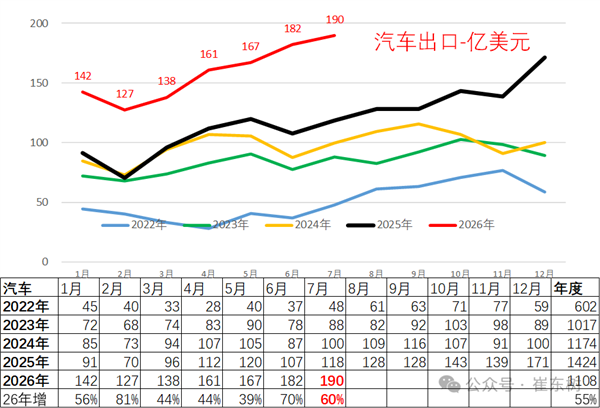
2026年1至7月中国汽车出口达到1108亿美元(约合7465.54亿元人民币),同比增长55%。其中7月单月汽车出口190亿美元(约合1280.19亿元人民币),同比增长60%。
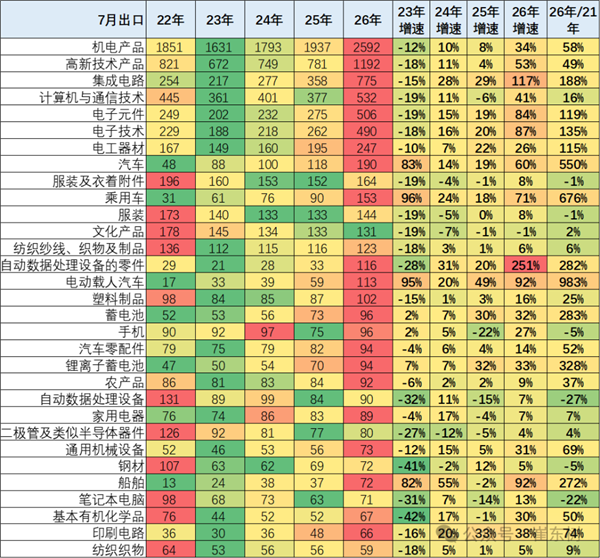 从年度走势来看,中国汽车出口呈现爆发增长态势。2021年全年汽车出口仅345亿美元,2024年跃升至1174亿美元,2025年全年达到1424亿美元。按照当前月度趋势,2026年全年汽车出口预计突破2108亿美元,较2021年增长超过550%。细分品类中,乘用车7月出口153亿美元,同比增长71%;电动载人汽车7月出口113亿美元,同比增长92%,成为出口增长的核心引擎。船舶7月出口72亿美元,同比增长92%,同样表现强劲。
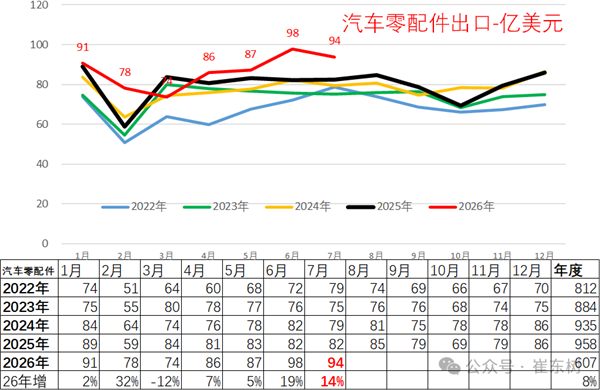
 汽车零部件出口则面临不同局面。7月零部件出口94亿美元,同比增长14%;1至7月累计607亿美元,同比增长8%。崔东树指出,中国自主整车出口基本不去美国市场,但汽车零部件出口仍以美国为主要市场,零部件企业需要跟着自主整车企业发展,改变依托欧美售后体系的特征。
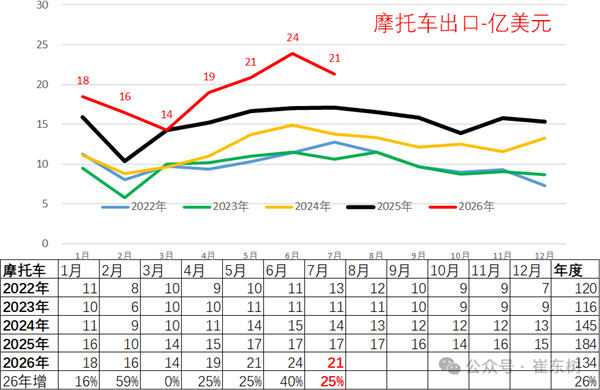
 摩托车出口方面,1至7月累计134亿美元,同比增长26%;7月单月21亿美元,同比增长25%。2026年6月摩托车出口达到24亿美元,创历史新高。崔东树表示,燃油摩托车因高油价增速放缓,电动摩托车暴增。摩托车与汽车整车面对完全不同的市场,中国摩托车出口是多元市场布局。崔东树特别提到,摩托车是汽车学习的榜样。

C | 在缺少国内市场支撑的情况下,摩托车行业通过电动化和充分市场价格竞争培育了超强竞争力,近几年实现超高出口额增长,且出口单价表现较好。整体商品贸易方面,2026年1至7月中国商品贸易出口额为25237亿美元,同比增长18%。汽车出口在所有品类中增速领先,集成电路7月出口775亿美元同比增长117%,电动载人汽车、船舶等品类同样表现突出。

D |
。
Current article:http://g8pz.xiaqingzhuangdaminnan.cyou/p3kgt3/20260826/4184.html
Published on:04:30:40